
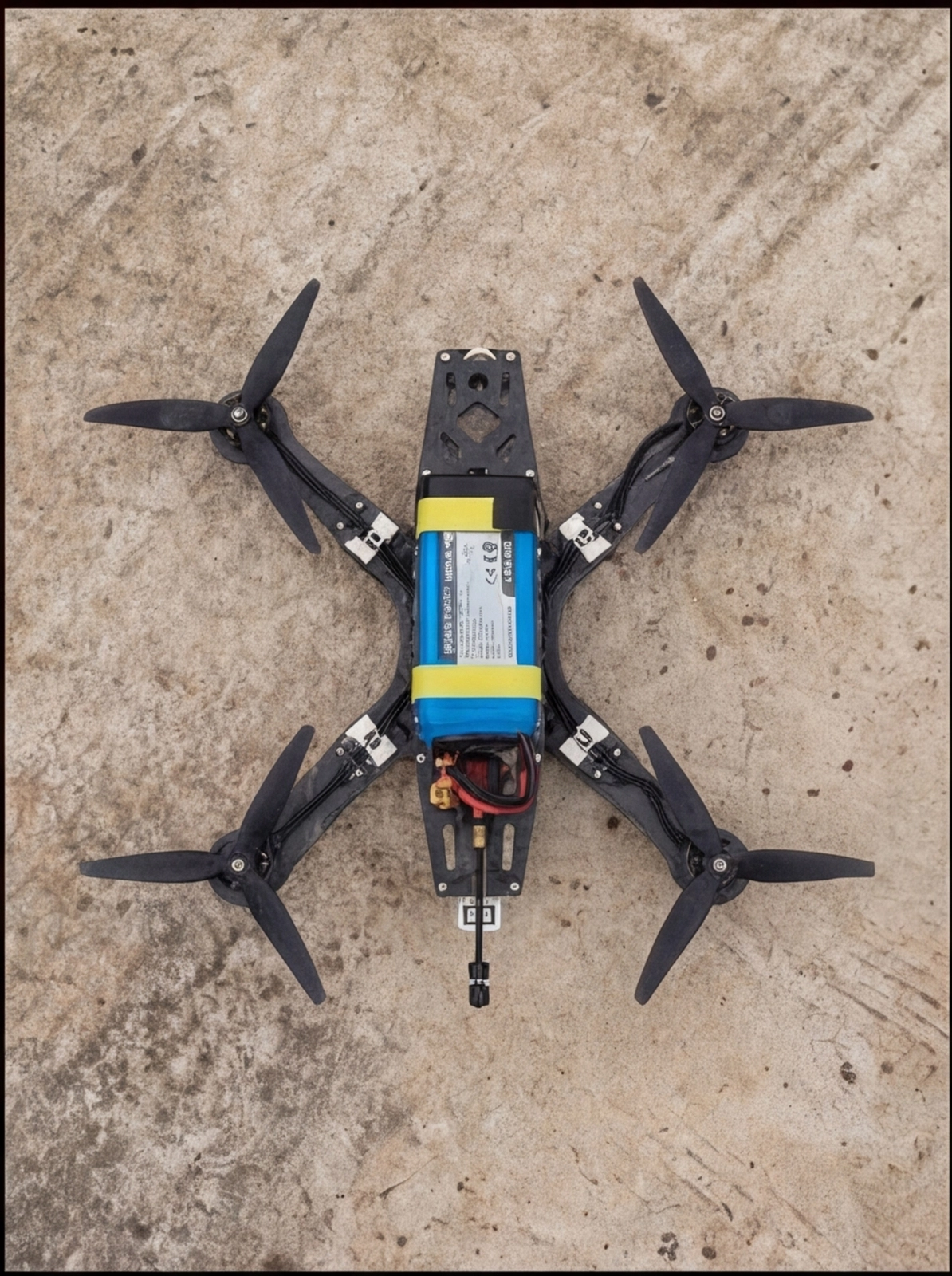
How AI-Guided Kamikaze Drones Are Rewriting the Rules of Modern Warfare — and What It Means for Africa.
Something changed in October 2020 over the mountains of Nagorno-Karabakh. Armenian armoured columns, dug into defensive positions they had held for decades, began disappearing — not from conventional artillery or air strikes, but from drones that loitered overhead, selected their targets, and dived. Within six weeks, the conflict was effectively over. A technology that defence analysts had been tracking quietly for years had announced itself to the world.
That technology is the loitering munition — sometimes called the kamikaze drone, the suicide drone, or the one-way attack UAV. Since Nagorno-Karabakh, it has appeared in Ukraine, Yemen, Libya, Syria, and increasingly in the threat assessments of every serious military force on the continent of Africa. It is no longer a niche capability. It is a defining feature of how wars are now fought.
This article explains what loitering munitions are, how they work, why they have changed the tactical and strategic calculus of modern conflict, and why Africa — a continent facing a worsening drone-enabled insurgency problem and a deepening hunger for sovereign defence capability — cannot afford to be a passive consumer of this technology.
A technology that defence analysts had been tracking quietly for years announced itself to the world in the mountains of Nagorno-Karabakh. The loitering munition had arrived.
What Is a Loitering Munition?
A loitering munition is a precision weapon system that combines the endurance of a surveillance drone with the lethality of a guided missile. Unlike a conventional missile, which is fired at a target that must be known and designated before launch, a loitering munition is launched into an area, searches for its target autonomously or under operator direction, and then executes a terminal attack dive — destroying itself in the process.
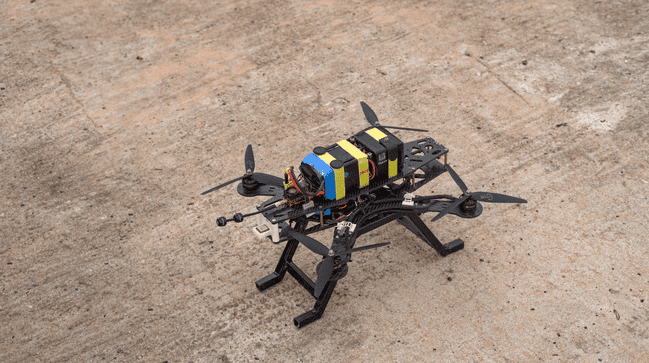
The name describes the defining behaviour: the system loiters. It circles an area of interest — sometimes for minutes, sometimes for hours — waiting for the right target or the right moment. This patience is tactically transformative. It means a single operator can maintain persistent lethal overwatch of an area far beyond visual range, far beyond the reach of direct fire weapons, and with a precision that conventional indirect fire simply cannot match.
The loitering munition sits at the intersection of three previously distinct capabilities:
• The endurance and range of a reconnaissance UAV
• The autonomous or semi-autonomous guidance of a smart weapon
• The destructive payload of a precision-guided munition
What makes this combination so powerful — and so disruptive — is that it delivers all three at a fraction of the cost of traditional precision strike systems. A conventional anti-tank guided missile system costs hundreds of thousands of dollars and requires a static or near-static launch platform. A loitering munition can be launched by a two-man team from a vehicle, a boat, or a prepared firing position, and can reach targets many kilometres away with similar precision.
How Loitering Munitions Work: The AI Inside the Weapon
Modern loitering munitions are not remotely piloted aircraft in the traditional sense. While a human operator typically initiates the launch and can designate a target or abort an attack, the guidance, navigation, and terminal phase of a strike are increasingly handled by onboard artificial intelligence.
The typical operational sequence unfolds in three phases:
Phase 1 — Launch and Transit
The munition is launched from a tube, rail, or catapult system. It deploys wings, activates its propulsion system, and climbs to an operating altitude. In this phase, it navigates to the designated search area using GPS or inertial navigation. Some systems use encrypted data links to receive updated coordinates or target designations from the operator during transit.
Phase 2 — Loiter and Search
This is the phase that gives the weapon its name. The munition circles the target area at an altitude that balances detection risk against sensor effectiveness. Onboard sensors — which may include electro-optical cameras, thermal imagers, synthetic aperture radar, or electronic signature detectors depending on the variant — continuously scan the environment below. AI algorithms process this sensor feed in real time, classifying objects against a library of target signatures: vehicle types, structural profiles, radar emissions, thermal heat signatures.
In operator-in-the-loop configurations, the AI presents candidate targets to the human controller, who makes the final engagement decision. In higher-autonomy configurations, the system can prosecute targets within defined rules of engagement parameters without continuous human input — though international humanitarian law continues to shape how responsible manufacturers design these systems.
Phase 3 — Terminal Engagement
Once a target is designated, the munition transitions from loiter to attack. The AI calculates an optimal approach vector — one that maximises warhead effect while minimising the chance of last-second detection and countermeasures. The munition accelerates into its terminal dive, adjusting trajectory continuously using proportional navigation algorithms. At the point of detonation, the warhead delivers its effect across the impact radius.
This three-phase architecture is what separates a loitering munition from a cruise missile (which has a fixed target programmed before launch and cannot loiter) and from a conventional armed drone (which carries re-usable munitions and is not expended on impact).
The loitering munition’s patience is its most dangerous quality. It circles, it watches, it waits — and then it strikes with pinpoint precision. That persistence is what no conventional weapon system can replicate.
The Battlefield Record: Where Loitering Munitions Have Changed the Calculus
The global deployment record of loitering munitions across recent conflicts offers a clear picture of their operational impact — and provides Africa’s military planners with critical lessons.
Nagorno-Karabakh, 2020
The conflict between Azerbaijan and Armenia over the Nagorno-Karabakh region is widely regarded as the first large-scale demonstration of loitering munition effectiveness. Azerbaijani forces used loitering munitions alongside conventional armed drones to systematically destroy Armenian armour, artillery, and air defence systems. The psychological effect was as significant as the physical destruction: Armenian forces lost confidence in their ability to operate heavy equipment safely, fundamentally disrupting their defensive doctrine. The war lasted 44 days. Loitering munitions were a primary reason.
Ukraine, 2022–present
The conflict in Ukraine has seen loitering munitions deployed at industrial scale by both sides. Iranian-designed one-way attack drones, produced domestically under licence, have been used in saturation attacks against Ukrainian energy infrastructure, command posts, and armoured vehicles. Ukrainian forces have used their own loitering munitions extensively against Russian logistics, armour, and command elements. The conflict has demonstrated that loitering munitions are not special-operation weapons — they are mainstream tools of combined-arms warfare.
Yemen and the Gulf
Houthi forces in Yemen have demonstrated that even non-state actors with access to loitering munition technology — or the knowledge to improvise it — can hold at risk targets of enormous strategic value. The 2019 strikes on Saudi Aramco facilities at Abqaiq and Khurais temporarily disrupted approximately five percent of global oil supply. The incident fundamentally changed how Gulf states think about the protection of critical infrastructure, and drove a surge in counter-drone investment across the Arabian Peninsula that continues to this day.
The Sahel and West Africa
While loitering munitions have not yet been deployed at scale by non-state actors in West Africa, the trajectory is clear. Groups operating in Mali, Burkina Faso, Niger, and Nigeria have demonstrated increasing sophistication in their use of commercial UAVs for reconnaissance, bomb delivery, and psychological operations. The capability gap between commercial drone misuse and purpose-built loitering munitions is narrowing. African militaries that wait for this threat to fully materialise before developing doctrine and capability will be starting from a position of dangerous disadvantage.
What the Numbers Mean: Key Performance Metrics Explained
Evaluating a loitering munition requires understanding which specifications actually matter tactically and why. The following metrics are the primary parameters that defence procurement officers should examine:
| Parameter | UNIKAM-Series |
| Speed | The velocity at which the munition transits and executes its terminal dive. Higher speed reduces the window for countermeasures and increases kinetic energy at impact. |
| Impact radius | The area of effect of the warhead at detonation. This is a function of both warhead design and terminal approach angle, and determines the margin for targeting error. |
| Loiter endurance | How long the munition can remain airborne in search mode. Longer endurance extends the operational window and allows operators to wait for high-value targets. |
| Operating range | The maximum distance from the launch point at which the munition can engage. Determines stand-off capability and operator safety. |
| Guidance mode | The degree of autonomy in target acquisition and engagement — from fully operator-controlled to AI-autonomous within defined parameters. |
| Warhead type | The nature of the explosive payload — shaped charge for armour penetration, blast-fragmentation for area effect, or thermobaric for enclosed spaces. |
The Case for African-Made Loitering Munitions
Africa’s defence procurement landscape has long been characterised by dependency — on European arms exports, American foreign military financing, and increasingly Russian and Chinese equipment. This dependency creates structural vulnerabilities that go beyond the question of cost.
Foreign-supplied weapon systems come with strings: export licences that can be revoked, spare parts pipelines that can be disrupted, technology transfer restrictions that prevent local maintenance and modification, and political conditions tied to continued supply. When an African government’s security situation changes — as it often does, rapidly — these dependencies become acute liabilities.
Loitering munitions are a category where the window for indigenous African capability development is still open. The technology is complex but not prohibitively so. The manufacturing requirements are achievable with the engineering talent that exists on the continent. And the operational need is not theoretical — it is present and growing.
| KEY CONSIDERATION FOR PROCUREMENT OFFICERSWhen evaluating loitering munition suppliers, the ability to conduct in-country maintenance, access spare components, modify system parameters, and train domestic operators without ongoing foreign dependency should be weighted alongside raw capability specifications. Supply chain sovereignty is a strategic capability, not a procurement preference. |
Introducing the UNIKAM-Series: West Africa’s First Integrated Loitering Munition
Babasky Technologies — Nigeria’s leading UAV and defence systems manufacturer — has developed the UNIKAM-Series: West Africa’s first domestically designed and manufactured integrated loitering munition system.
The UNIKAM-Series represents the product of sustained engineering investment in AI-guided munition technology, built from the ground up on African soil, by African engineers, for the specific operational environments and threat profiles of the continent — and beyond.
| Parameter | UNIKAM-Series |
| Maximum speed | 210+ km/h |
| Impact radius (observed) | 200+ metres |
| Guidance system | AI-enabled autonomous target acquisition and terminal guidance |
| Engagement mode | Operator-in-the-loop with AI target classification |
| Origin | Designed and manufactured in Nigeria by Babasky Technologies |
| Technology transfer | Available — no export restriction dependencies |
What 210+ km/h Means in Practice
At 210 kilometres per hour, the UNIKAM-Series closes on a target from one kilometre away in approximately 17 seconds. At the point of terminal dive initiation — typically from several hundred metres — an operator of a conventional portable air defence system has less than 10 seconds to detect, track, and engage. In operational testing, this speed profile has proven highly effective against both stationary and slow-moving targets.
Speed in a loitering munition is not simply a prestige specification. It is a survivability parameter. It directly determines how much time an adversary has to respond between the moment a munition is detected and the moment it impacts.
What a 200+ Metre Impact Radius Means in Practice
An impact radius of 200 metres does not mean that the warhead destroys everything within that distance. It means that the effects of the warhead — fragmentation, blast overpressure, or shaped charge penetration depending on variant — extend meaningfully to that distance. For command posts, logistics concentrations, light vehicle formations, and radar installations, this is a highly effective zone of effect that provides a significant margin for targeting error while still achieving mission objectives.
Procurement Considerations: How Defence Forces Should Evaluate a Loitering Munition

For military commanders, defence ministry procurement officers, and security directors evaluating a loitering munition capability, the following framework provides a structured basis for assessment:
1. Operational fit
What targets must the system engage? Armoured vehicles require shaped-charge warheads and high terminal velocity. Personnel concentrations and light vehicles require blast-fragmentation effect. Command infrastructure requires both. Ensure the system’s warhead variants match your operational requirements.
2. Operator training burden
A loitering munition is only as effective as the operator using it. Evaluate the training time required to achieve operational proficiency, the availability of simulation training, and the complexity of the command-and-control interface. Systems that require months of specialist training introduce force generation delays that may not be acceptable.
3. Logistics and supply chain
How quickly can replacement munitions be delivered? Where are spare components sourced? Can field-level maintenance be performed by your own technicians? For African forces operating in austere environments with extended logistics chains, these questions are often more operationally decisive than raw capability specifications.
4. Integration with existing C2
Can the system integrate with your existing command, control, and communications architecture? Does it require proprietary ground control equipment, or does it operate with standard protocols? The fewer bespoke dependencies a system introduces, the lower the long-term total cost of ownership.
5. Supplier relationship and in-country support
What is the supplier’s track record of supporting fielded systems? Is technical support available in-country or only from the supplier’s home country? Can the supplier provide training, maintenance contracts, and upgrade pathways without requiring the involvement of a foreign government?
Conclusion: Africa Cannot Afford to Wait
The loitering munition is not a future technology. It is a present reality on battlefields across the world — and its relevance to Africa is growing faster than most defence planners are prepared to acknowledge. The insurgencies of the Sahel, the piracy threat in the Gulf of Guinea, the instability along the Horn of Africa’s borders — these are not problems that conventional military responses are solving. They are exactly the threat environments for which loitering munitions were designed.
Africa’s militaries face a choice. They can continue to depend on foreign suppliers — accepting the export restrictions, the political conditions, and the supply chain vulnerabilities that come with that dependency. Or they can invest in indigenous capability: in engineering, in manufacturing, in the knowledge and systems that allow a continent to defend itself on its own terms.
Babasky Technologies has made its choice. The UNIKAM-Series is the product of that choice — proof that world-class loitering munition technology can be designed, built, and fielded from Nigeria, for Africa and beyond.
The question for Africa’s defence planners is not whether loitering munitions are relevant to the continent’s security. They already are. The question is whether Africa will shape this technology — or simply receive it on someone else’s terms.
Engage with Babasky Technologies
For capability demonstrations, procurement enquiries, or partnership discussions about the UNIKAM-Series loitering munition system or any of Babasky’s defence technology portfolio, contact our defence systems team.
www.babasky.com | info@babasky.com
