
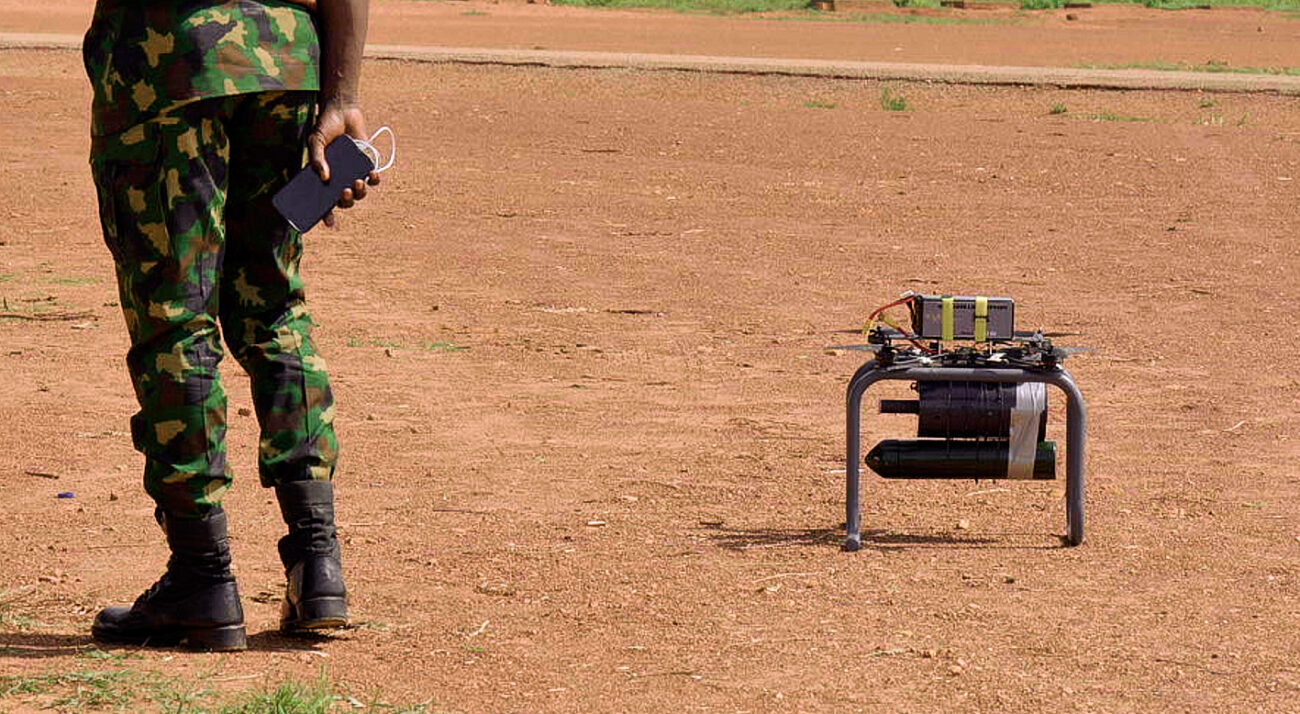
In a significant milestone for modern tactical unmanned systems, the UNIKAM-FO1 (Fiber Optics Kamikaze) loitering munition has successfully completed a series of rigorous operational flight tests at the Nigerian Defence testing range, Military Cantonment, Jaji, Kaduna state. By utilizing a physical, ultra-fine fiber-optic/Kevlar micro-tether, the multi-rotor platform has achieved what wireless systems cannot: 100 percent resistance to electronic jamming and signal spoofing.
The Electronic Warfare Dilemma & The Fiber Solution
As battlefield air defense increasingly relies on localized electronic countermeasures (ECM), traditional radio-controlled First-Person View (FPV) drones face massive disruption rates. Signal jamming, GPS degradation, and video feed dropouts frequently cause wireless platforms to lose connection in critical environments.
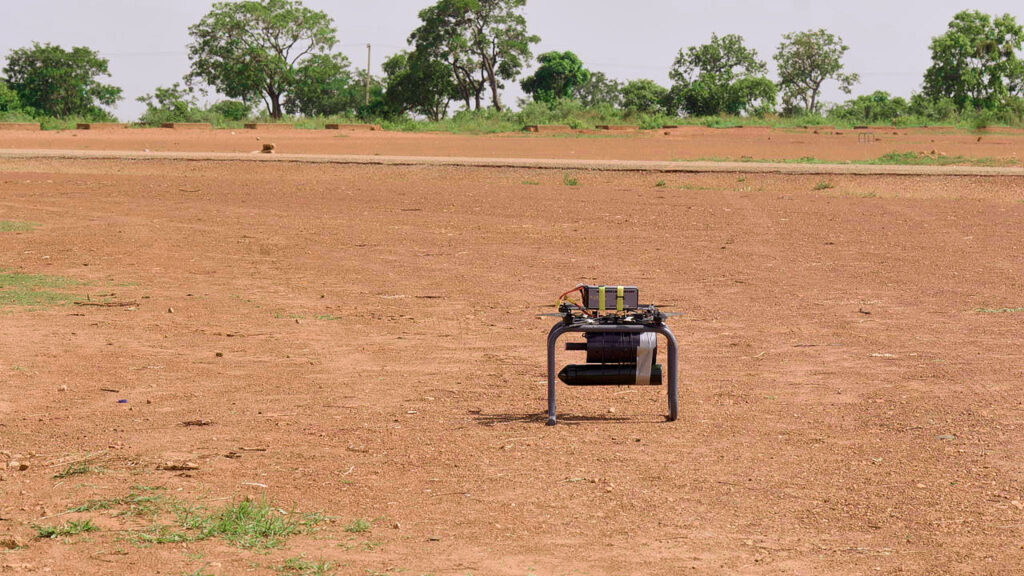
The UNIKAM-FO1 circumvents this vulnerability entirely. By deploying a high-tensile physical fiber-optic spool behind it as it flies, the drone maintains a closed-loop, un-jammable data pipeline. This delivers crystal-clear, real-time high-definition video feedback and telemetry directly to the operator’s FPV goggles, completely insulated from the surrounding active radio frequency (RF) spectrum.
The integration of Kevlar reinforcing within the spool adds the structural integrity required to survive tough environments. It prevents snags and line breakages, allowing the multi-rotor platform to aggressively weave through dense tree lines, rugged hills, and urban obstacle courses where radio waves typically reflect or fail to penetrate.
Technical Specifications Breakdown
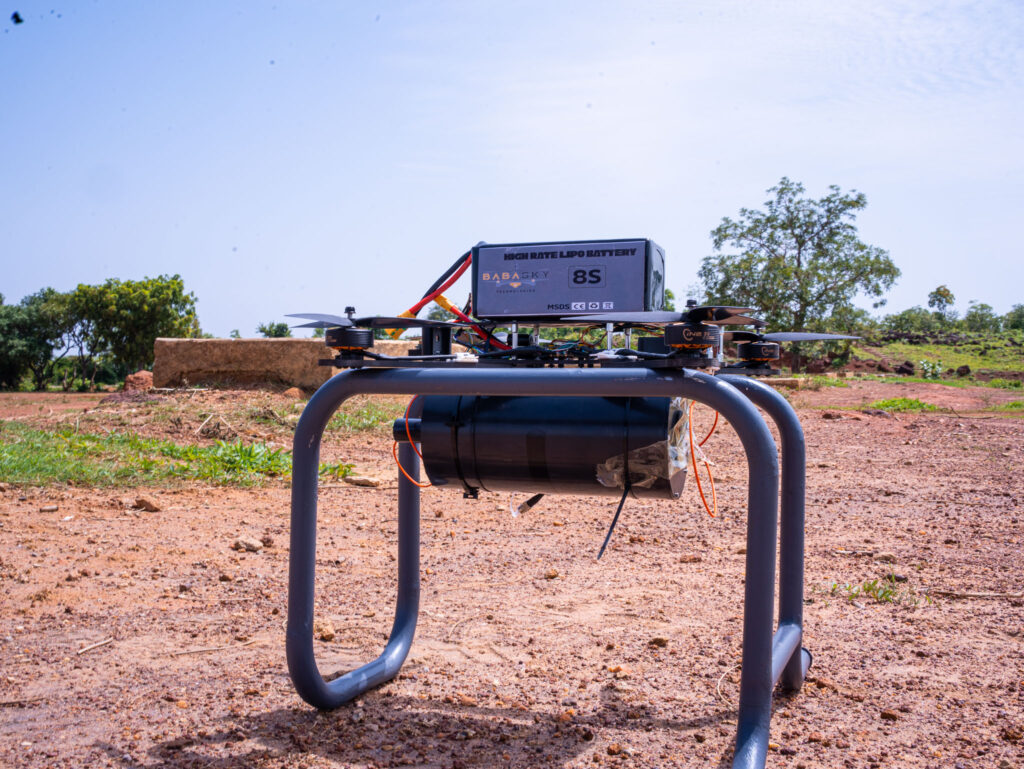
Engineered for precision strike missions in highly contested airspace, the UNIKAM-FO01 balances hard-hitting kinetic capability with robust data-link security:
| Feature / Parameter | Engineering Specification |
| System Type | Multi-rotor Loitering Munition (UNIKAM-FO01) |
| Payload Capacity | 2.5 kg |
| Warhead Type | Indigenous High-Energy Composite Warhead |
| Fiber Optics Spool Sizes | 5 km, 10 km, and 15 km variants |
| Maximum Speed | Up to 120+ km/h |
| Operational Range | 8 – 15 km (spool configuration dependent) |
| Endurance | 9 – 15 minutes (at optimal payload utilization) |
| Navigation System | Manual First-Person View (FPV) |
| Launch Method | Rapid Ground Launch |
| Control System | Physical Fiber Optics + FPV Goggles (5.8 GHz architecture) |
| Detonation Method | Secure Fiber Optics Remote Initiation |
Flight Review & Sequence of Events
The live flight validation program successfully evaluated the mechanical spool deployment dynamics, structural stability, and terminal command pathways of the system under true operational tracking parameters:
- High-Speed Target Ingress: Outfitted with the baseline 5 km fiber-optic spool, the UNIKAM-FO01 launched seamlessly from a ground deployment frame. The multi-rotor rapidly accelerated to its maximum attainable speed of 120+ km/h, racing toward its target destination while maintaining an uncompromised telemetry link.
- Kinetic Engagement: Proving its terminal guidance precision, a direct ramming impact occurred right on the designated target coordinates. The vehicle’s structural frame held up perfectly under extreme aerodynamic forces during its high-velocity final dive.
- Parallel Recovery Testing: In a separate testing vector designed to check spool payout and maneuvering limits without expending a payload, secondary iterations of the drone were flown continuously for approximately 5 minutes across intricate terrain and obstacle paths before executing a controlled, safe recovery landing.
Secure, Multi-Tier Detonation Protocols
Beyond its immunity to radio jamming, the UNIKAM-FO01 incorporates a highly strict safety architecture. The 2.5 kg indigenous high-energy composite warhead is managed via a dedicated remote initiation channel running exclusively through the secure fiber-optic line. This eliminates any threat of wireless interception, frequency scanning, or accidental triggers by friendly or hostile signal signals—ensuring that command-to-detonate protocols remain strictly in the operator’s hands until the moment of impact.
Looking Ahead
As global defense ecosystems transition toward high-intensity electronic warfare environments where wireless radio frequencies can no longer be guaranteed, the UNIKAM-FO01 establishes an institutional benchmark. By bridging the absolute reliability of hardwired connections with the high speed and agility of multi-rotor platforms, it gives modern operators a tactical asset that can see, strike, and succeed where traditional drones go dark.
